How to Get to Raja Ampat: A Complete Transit Guide
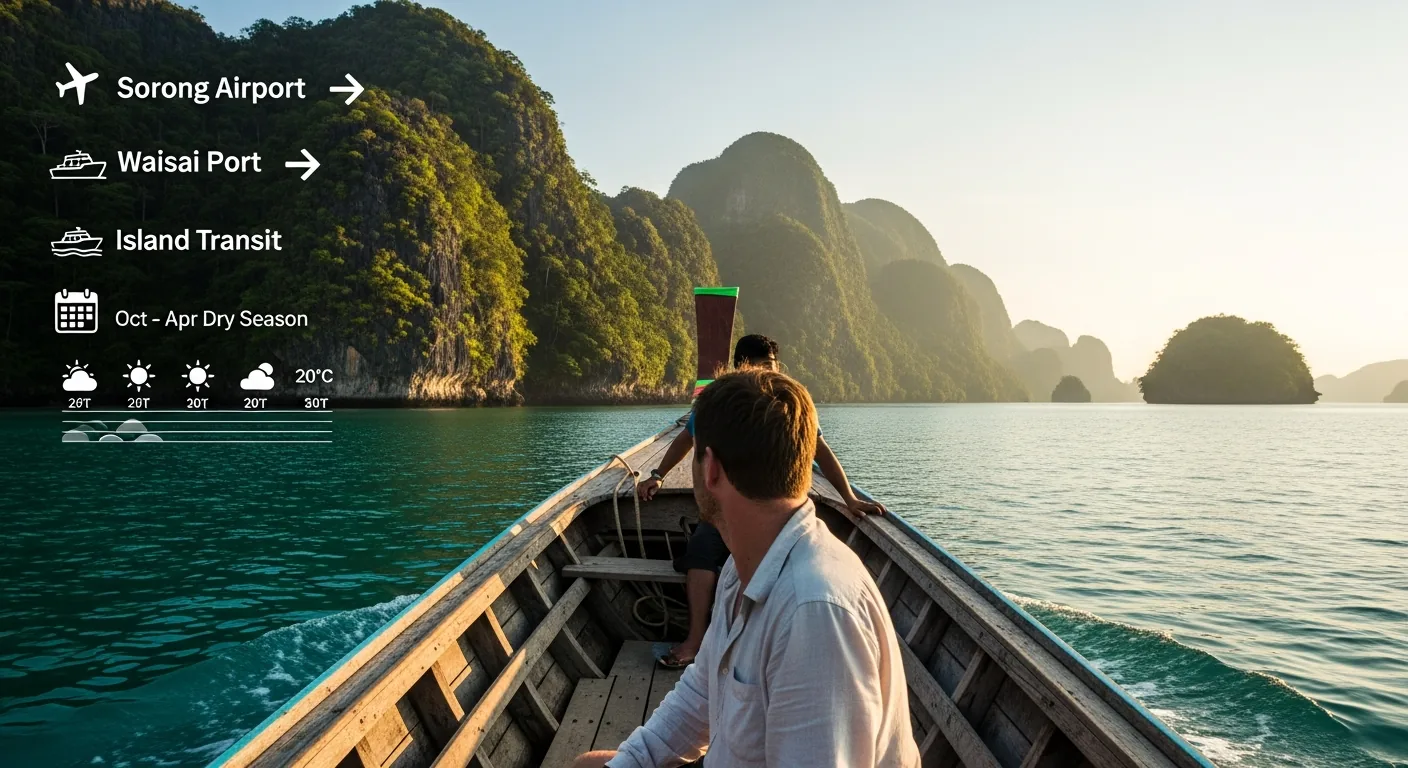
The remoteness of the Raja Ampat archipelago is not an inconvenience; it is the very mechanism of its preservation. Situated off the northwest tip of New Guinea, within the world’s most biodiverse marine region known as the Coral Triangle, these islands are insulated from mass tourism by a multi-stage transit that rewards the dedicated traveler. Reaching this area, home to over 1,600 species of fish and 75% of the world’s known coral species, requires precise logistical planning. The journey itself becomes a preamble to the pristine environment you are about to enter. The perceived complexity of the Raja Ampat transit is often the first barrier to entry, but with a clear, methodical approach, it becomes a manageable sequence of flights, ferries, and boats. This guide deconstructs the process, providing the actionable details necessary for a seamless passage from major international hubs to the heart of the Four Kings. See also: book Jakarta To Sorong Flights.
The Three-Stage Transit to Raja Ampat: An Overview
The complete journey to your resort or liveaboard in Raja Ampat is best understood as a three-part logistical chain. Each link presents specific choices and required actions. Misunderstanding this sequence is the most common pitfall for first-time visitors. The primary gateway to the region is the city of Sorong (SOQ) in West Papua. From there, you must cross the Dampier Strait to Waisai, the administrative capital of the Raja Ampat Regency located on the island of Waigeo. The final leg is a private transfer to your specific island destination. See also: explore Home.
According to Sarah Lewis, a travel logistics specialist who has organized over 50 expeditions to the region, “The key is to view the journey not as a single flight, but as three distinct transfers. Book each segment with a sufficient time buffer—at least three hours between flight arrival and ferry departure, and ideally an overnight stay in Sorong if your flight lands after noon. Delays are a part of travel in this part of the world, and a rigid, back-to-back schedule is inadvisable.” See also: see How to Get to Raja Ampat Guide’s About.
The standard transit path follows this structure:
- Stage 1: Flight to Sorong. An international flight to an Indonesian hub, followed by a domestic flight to Domine Eduard Osok Airport (SOQ) in Sorong.
- Stage 2: Ferry to Waisai. A taxi from Sorong’s airport to the ferry terminal, followed by a two-hour public ferry to Waisai on Waigeo Island.
- Stage 3: Final Boat Transfer. A pre-arranged private speedboat transfer from the Waisai harbor to your final accommodation (resort, homestay, or liveaboard meeting point).
Understanding these distinct stages is the foundation of a successful Raja Ampat transit plan. Each requires separate bookings, payments, and an awareness of local schedules. See also: Contact pricing.
Stage 1: International and Domestic Flights to Raja Ampat’s Gateway, Sorong (SOQ)
There are no direct international flights to Sorong. All travelers must first enter Indonesia through a major international airport, with Jakarta (CGK) and Makassar (UPG) serving as the two primary domestic hubs for onward travel to West Papua. The choice between these hubs often depends on your international airline and point of origin.
The Jakarta to Sorong Route (CGK-SOQ)
Soekarno-Hatta International Airport (CGK) in Jakarta is Indonesia’s largest airport and offers the most reliable, albeit not always the most frequent, connections. Several domestic carriers operate the Jakarta to Sorong route. The direct, non-stop flights are exclusively red-eye, departing late in the evening (typically between 10:00 PM and 1:00 AM) and arriving in Sorong early the next morning (between 6:00 AM and 8:00 AM local time). This schedule is advantageous, as it positions you perfectly to catch the 9:00 AM ferry to Waisai.
- Airlines: Garuda Indonesia, Batik Air, and Pelita Air are the principal operators for direct flights.
- Flight Duration: Approximately 4 hours.
- Cost: One-way fares typically range from $250 to $450 USD when booked several months in advance. Prices can increase significantly closer to the travel date, especially during the peak season from October to April.
- Baggage Allowance: Standard allowance is 20kg for checked baggage. Divers with heavy equipment should confirm excess baggage fees, which can be around $7-$10 per kilogram. Batik Air sometimes offers a more generous 30kg allowance.
The Makassar (UPG) and Bali (DPS) Transit Options
Makassar’s Sultan Hasanuddin International Airport (UPG) is a major hub for eastern Indonesia and serves as an excellent alternative. It often provides more flight options and potentially lower fares, especially if your journey originates in Bali (DPS) or Singapore (SIN). Most flights from Bali to Sorong will have a layover in Makassar. While this adds a stop, it can open up more flexible departure times compared to the rigid overnight schedule from Jakarta. A typical DPS-UPG-SOQ route takes between 5 and 7 hours, including the layover. Lion Air and Wings Air are common carriers on these secondary routes.
Flight Comparison: Jakarta vs. Makassar to Sorong
| Transit Hub | Primary Airlines | Average Duration (Direct/Layover) | Typical Schedule | Average Cost (One-Way) |
|---|---|---|---|---|
| Jakarta (CGK) | Garuda Indonesia, Batik Air | 4 hours (Direct) | Overnight (Red-eye) | $250 – $450 USD |
| Makassar (UPG) | Lion Air, Batik Air, Sriwijaya Air | 2 hours (Direct) / 4-6 hours (from Bali) | Multiple daily departures | $150 – $300 USD |
Regardless of your chosen route, booking domestic flights to Raja Ampat well in advance is critical. We recommend using a reputable online travel agency or booking directly on the airline’s website. Be aware that some Indonesian airline websites can be difficult for international users; patience and persistence are key.
Navigating Domine Eduard Osok Airport (SOQ) and Sorong
Domine Eduard Osok Airport (SOQ) is a relatively small and straightforward facility. Upon arrival, you will collect your baggage and exit into the main arrivals hall. This is where the transition from air to ground travel begins. It is highly recommended to have Indonesian Rupiah (IDR) on hand before you land, as you will need it for the taxi to the ferry terminal. While ATMs are available, having at least IDR 300,000 (~$20 USD) is a prudent measure.
From the airport, your next destination is the ferry harbor, Pelabuhan Rakyat Sorong. Taxis are readily available outside the terminal. There is no official metered service; you must negotiate the fare before entering the vehicle. The standard, fair price for the 15-20 minute journey is between IDR 100,000 and IDR 150,000 (approximately $6 to $10 USD). Do not accept initial offers that are significantly higher.
Many travelers face a layover in Sorong, especially if their flight schedule does not align with the ferry. If your flight arrives after 1:00 PM, you will miss the last public ferry to Waisai and must spend the night. The most commonly recommended hotel for this purpose is the Swiss-Belhotel Sorong, a 4-star property located about 10 minutes from the airport, offering reliable comfort, dining, and assistance with onward travel arrangements. A standard room costs approximately $60-$80 USD per night.
Stage 2: The Sorong to Waisai Ferry – The Main Artery to the Islands
The public ferry is the economic and logistical lifeline connecting the mainland of West Papua to Raja Ampat’s primary island, Waigeo. The journey across the Dampier Strait is a crucial part of the Raja Ampat transit and offers the first scenic glimpses of the archipelago. The primary vessel for travelers is the air-conditioned express ferry, operated by Bahari Express.
The ferry terminal in Sorong is called Pelabuhan Rakyat. It is a busy, functional port. You should purchase your tickets directly from the official ticket counter (loket) inside the terminal building. Avoid touts outside who may offer to “help” for an additional fee. The process is straightforward, but it’s best to arrive at least 45-60 minutes before the scheduled departure to secure your ticket, especially during peak season.
Ferry Schedule and Classes
The express ferry schedule is consistent but can be subject to change due to weather or holidays. It is always wise to have your hotel or a local contact double-check the times a day before you travel.
- Departures from Sorong to Waisai: Typically 9:00 AM and 2:00 PM daily.
- Departures from Waisai to Sorong: Typically 9:00 AM and 2:00 PM daily.
- Journey Time: Approximately 2 hours.
There are two classes of tickets available for the Sorong to Waisai ferry:
- Economy (Ekonomi): Costs approximately IDR 125,000 (~$8 USD). Seating is on the lower deck, which can be crowded and has less effective air conditioning.
- VIP (Eksekutif): Costs approximately IDR 250,000 (~$16 USD). Located on the upper deck, this ticket provides a more comfortable reclining seat, powerful air conditioning, and a less crowded environment. For the small price difference, the VIP ticket is highly recommended for international travelers.
Once you arrive at the Waisai ferry terminal, you will be greeted by a number of drivers and representatives from local homestays. If you have a pre-arranged transfer, your boat captain should be waiting for you here, likely with a sign bearing your name or the name of your resort.
Stage 3: Waisai to Your Final Destination via Private Boat
Waisai is the administrative center of Raja Ampat, but it is not the final stop. The archipelago’s premier dive resorts and biodiverse reefs are scattered across dozens of smaller islands, requiring a final transfer by private speedboat. This last leg of the journey must be arranged in advance, directly with your accommodation. Arriving in Waisai without a confirmed boat transfer will result in significant delays and expense.
The cost and duration of this transfer depend entirely on the location of your resort. The transfer fee is typically priced per boat, not per person, and can be split if other guests are arriving on the same ferry. Communication with your resort is paramount to coordinate this pickup.
Example Transfer Times and Costs from Waisai:
- To Kri Island or Gam Island (Central Raja Ampat): A 45-75 minute boat ride. The cost for a private boat charter is typically between $70 and $120 USD one-way.
- To the Fam Islands (Central-West): A 90-minute to 2-hour boat ride. Expect costs to be in the range of $250 – $400 USD.
- To Misool (Southern Raja Ampat): This is a much more significant journey of 4-6 hours by a large, powerful speedboat. This transfer is almost exclusively arranged by the high-end resorts in Misool and can cost upwards of $1,500 USD for a private charter. Many Misool resorts have their own ferry service directly from Sorong on specific days, bypassing Waisai entirely.
“The single most critical piece of advice for the final transfer is pre-coordination,” notes Alex Tan, manager of a dive resort on Kri Island. “We schedule our boats to meet the 2:00 PM ferry. If a guest is delayed and misses it, we have to arrange a special, and much more expensive, private charter. Clear communication of your arrival time in Waisai is non-negotiable.”
Essential Logistics: Marine Park Permits and Final Preparations
Before you can fully immerse yourself in the region, there are two final logistical details to manage: the Raja Ampat Marine Park Permit and being prepared for the journey.
Raja Ampat Marine Park Entry Permit (PIN)
All visitors entering the Raja Ampat Marine Park are required to purchase an entry permit, known locally as a PIN. The revenue from these permits directly funds conservation and community development projects within the park.
- Cost for International Visitors: IDR 700,000 (~$45 USD).
- Cost for Indonesian Citizens: IDR 425,000.
- Validity: The permit is valid for 12 months from the date of purchase.
- Where to Purchase: The official office is located at the Waisai harbor, very close to the ferry terminal. You can purchase it upon arrival. Many resorts and liveaboards can also arrange the permit on your behalf in advance, which is a convenient option. You will need to present your passport.
You should carry this permit card with you, as it may be checked by park patrols during your stay.
Actionable Checklist for Your Raja Ampat Transit
To summarize, a well-planned trip requires a methodical approach. Follow these steps for a smooth journey:
- Book Flights: Secure your international and domestic flights to Sorong (SOQ) at least 3-4 months in advance. Aim for a flight that arrives in Sorong before noon to connect with the afternoon ferry.
- Arrange Accommodation and Final Transfer: Confirm your booking with your chosen resort or liveaboard. Critically, coordinate your private boat transfer from Waisai with them, providing your exact flight and ferry details.
- Prepare Local Currency: Have at least IDR 500,000 in cash upon arrival in Sorong for taxis, porters, and the ferry ticket.
- Plan for a Sorong Overnight: If your flight arrives after 1:00 PM, book a hotel in Sorong, such as the Swiss-Belhotel Sorong.
- Verify Schedules: A week before your departure, re-confirm the Sorong-Waisai ferry schedule with your accommodation provider.
- Purchase Marine Park Permit: Plan to acquire your PIN upon arrival in Waisai or confirm that your resort has arranged it for you.
The transit to Raja Ampat is an integral part of the experience. It is a journey that filters out the casual tourist, ensuring that those who arrive have a deep appreciation for the pristine sanctuary they are about to explore. With the right information and careful planning, the logistics become a satisfying prelude to an extraordinary destination.
How to Get to Raja Ampat Guide
For bespoke travel planning and seamless Raja Ampat transit logistics, including private charters and accommodation arrangements, contact our specialists.
Phone: +62 811 3941 4563
Email: bd@juaraholding.com
Office: Jalan Sunset Road No. 88, Kuta, Badung, Bali 80361, Indonesia